This website uses cookies to improve your experience. We'll assume you're ok with this, but you can opt-out if you wish.Accept
Privacy Overview
This website uses cookies to improve your experience while you navigate through the website. Out of these, the cookies that are categorized as necessary are stored on your browser as they are essential for the working of basic functionalities of the website. We also use third-party cookies that help us analyze and understand how you use this website. These cookies will be stored in your browser only with your consent. You also have the option to opt-out of these cookies. But opting out of some of these cookies may affect your browsing experience.
Necessary cookies are absolutely essential for the website to function properly. This category only includes cookies that ensures basic functionalities and security features of the website. These cookies do not store any personal information.
Any cookies that may not be particularly necessary for the website to function and is used specifically to collect user personal data via analytics, ads, other embedded contents are termed as non-necessary cookies. It is mandatory to procure user consent prior to running these cookies on your website.
Xbox
is the first time Microsoft have entered the console market, but they've
certainly listened to what the public have been wanting from a games machine
such as a hard drive on which to save your game positions, the ability to rip
CD tracks to play within the games and a broadband modem for when online gaming
is launched later in the year (abroad at least, since the UK date has yet to be
set).
The console received a rather unfair press reaction upon its launch, due to
it not selling as fast as was initially expected and, hence, the reason why
it didn't sell out on launch as the last-released console, the
Sony Playstation 2,
had. A price war with the Nintendo Gamecube didn't help as they slashed
their price to £130 in time for launch day (May 3rd 2002), just one
week after the Xbox's price cut but having had announced this after Microsoft's
announcement of the then-impending price cut.
Look beyond that at what a console can actually do and although not many will
be able to afford more than one console at a time, especially since they all
require individual accessories for extra controllers, connections, etc., the
Xbox has a lot going for it.
The first thing you'll notice about the Xbox is it's size. It's big. Much
bigger than just about any other console that's gone before it and almost
matches the size of the average VCR. However, if you're an AV nut and have
your equipment set up in a rack or a tower you should be able to find a space
for it.
All the connections on the unit are very accessible. Starting from the front,
there's four controller ports, with the power and disc tray buttons in the
middle. Round the back there's simply a slot for the power lead, modem connection
(providing you have a broadband-enabled phone line) and an all-in-one AV
port, as opposed to the PS2's separate optical digital output.
Since the console comes only with the standard composite phono video and
audio lead connectors, those with an eye for quality will want to upgrade to
one with a SCART connector and/or s-video, as well as Dolby Digital and DTS since
many of the Xbox games make use of that audio facility. I wanted a lead which
combined all three, but it was very hard to track down given that only Joytech
appear to make one that does. It costs £14.99 and since it only appears
to be available in branches of Dixons, this is the only time you'll find me
recommending a trip to Dixons to actually buy something, as opposed to just
nipping in to annoy the staff by asking them a difficult question like
"what's overscan?"
Atop the unit forms an image of a large black "X", with grill edges either
side and a green circle with the console's title inside.
No ports are necessary for memory cards though, since that's what the hard
drive's for. It's also worth noting that the controllers come with vibration
built in, so no need for such an add-on, although the controllers do come with
two slots in their head for later additions.
What happens when you switch the Xbox on? A thumping, vibrating sound is heard
as a green nucleus, keeping with the colour theme, manifests itself as if
part of a genetic science experiment, before the 'camera' pans out to reveal
the Xbox logo.
When the menu appears, three settings are presented: Memory, Music and Settings,
with the appearance onscreen as if being set in a time tunnel, as the background
eeriely shifts backwards and forwards, changing as it goes and to the sound
of distant thunder and bizarre computer noises. Occasionally, you'll also hear
what sounds like voice transmissions being picked up and played out like the
voice synthesiser on a BBC Model B. Very odd, but quite cool. As you enter the
sub-menus there's a "zooming" sound effect as you shoot through to them.
Memory refers to the amount of space on the hard drive reserved for your
game saves, in the form of blocks. At first, and unless you save a lot of
games on the drive, it says there are "50000+ blocks" available, even though
I understand there are over 100,000. Either way, there's more than enough
space available.
Music: Here's where you can play your audio CDs, with a small visual
image akin to that of Windows Media Player as the console interprets what it
hears. You can also copy the audio tracks onto the Xbox's hard drive so as
to form the soundtrack for any game you wish to play which supports this
feature, if you don't like any or all of the tracks within the game itself,
with the option to rename the newly-recorded tracks correctly, but this can be
rather cumbersome with the Xbox controller compared to a keyboard.
Note, that the Xbox doesn't have a recordable CD drive so you can't put these
back onto another CD.
The Settings section allows you to alter the current
date and time (with an option for time zone and daylight savings, i.e.
putting the clocks back and forwards twice a year), menu language (English,
Chinese, German, French, Spanish, Italian), Audio (a choice of Dolby Surround,
Stereo or Mono, plus the enabling of Dolby Digital and DTS for those with the
appropriate equipment) and Video (4:3, Letterbox 16:9 on a 4:3 TV, and anamorphic
16:9, plus support for PAL-60)
The "Auto Off" feature will shut down the console after six hours of inactivity,
which is handy for those with children that would otherwise leave it on all
day long whether they're using it or not, while the 'System Info' selection
just gives a warning not to copy the Xbox software within the console.
Between this and the PS2's menu system, neither are overall better than the
other, but I think both are equally fantastic.
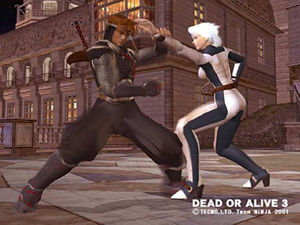
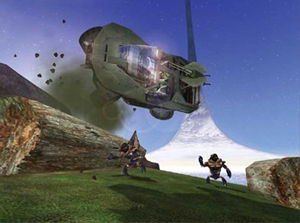
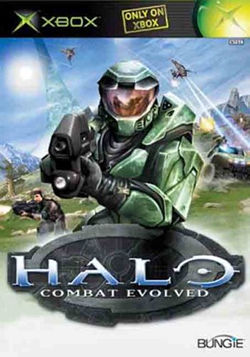
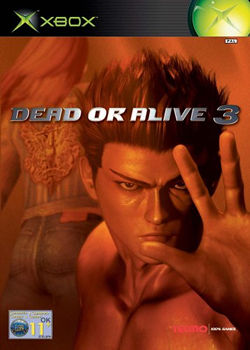
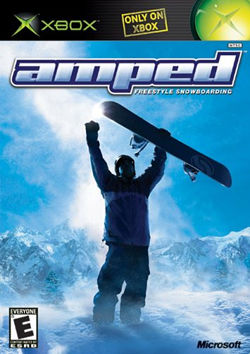
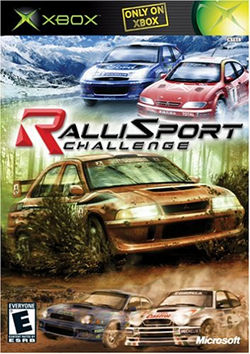
Four of the Xbox's launch titles.
Click on the covers to see the reviews.
Games are the primary reason for buying an Xbox and of the 40 or so launch
titles, the highlights definitely include first-person-shooter Halo,
martial arts entertainment in Dead or Alive 3 and driver Project
Gotham Racing, a follow-up to the Dreamcast's MSR. Reviews for
all games, with more to come, are listed in the "Xbox Reviews" link on the
left-hand menu.
Of course, with many titles coming out for more than one of the latest three
consoles, a machine will stand or fall depending on its exclusives, which
include the first and last of the three above, as well as two other titles
for which reviews will be coming soon, as I type this (early July 2002),
the latest in the series that began with Abe's Oddysee, Oddworld:
Munch's Oddysee and the mystical Azurik: Rise of Perathia.
The downside is that many of these games are £44.99 when new and, unlike
the PS2 there's no titles from a previous console which will be compatible on
this unit, but the potential is clearly there for games of the future and
if you shop around there should be a good deal out there.
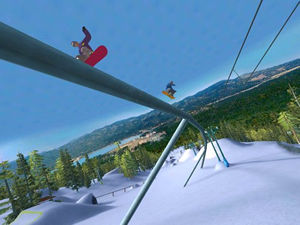
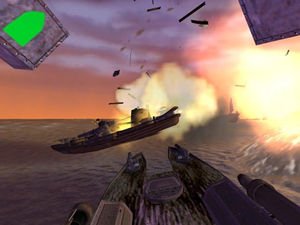
Of course, there have been a few early titles which haven't lived up to their
promise such as Amped, Blood Wake and Blood Omen 2. Graphically,
they impress, but deep down you have to question where's the beef? See the
reviews for individual reasons on each game.
Also, like the PS2, the Xbox has the ability to play DVDs and via both SCART
and S-video, whereas the PS2 had initial 'green screen' issues when watching
via SCART if it had to go through anywhere else apart from the TV, but in order
to watch the DVDs you will need to purchase a DVD remote control (around £30),
the sensor for which plugs into one of the controller ports.
It's rather on the sneaky side that an extra purchase would have to be made
for this, but not for Microsoft when you consider the advantage for them.
Every DVD player attracts a percentage cost which must be paid out by the
manufacturer, thus a form of tax. Although it's the unit which plays the DVDs,
this tax is only limited to a percentage of the cost of the remote control
since that is what enables the DVD facility. Strange, but true.
On the plus side, the video and audio quality when watching DVDs is excellent
and I've no complaints when watching them via the Xbox compared to the
Creative Dxr2 DVD-ROM player I use on my PC. Of course, though, it will
only play region 2 or region-free DVDs as standard. I've not heard of Xboxes
being chipped to play other regions, but surely it can't be long before a
region hack can be found and it'll be one in the eye for the Hollywood hotshots
who think region-encoding is a good idea.
The technical bit
NVIDIA XGPU
250 MHz
4 pixel pipelines
2 texels per pixel pipeline
8 texels per clock cycle (4 pixels with 2 texels per pixel)
Maximum of 4 texture layers per rendering pass (done in 2 clock cycles)
1.0 gigapixel per second
2.0 gigatexels per second
4.0 billion anti-aliased samples per second
Point, Bilinear, Trilinear, Anisotropic Mip-Map Filtering
Perspective-Correct Texture Mapping
DotProduct3 Bump Mapping (DOT3)
Environment Mapped Bump Mapping (EMBM)
Cubic Environment Mapping (CEM)
Volumetric Textures (3D Textures)
Z, Stencil, Shadow, and Multisampling buffers
S3TC and DirectX DXT1-DXT5 texture compression
Full-Scene Anti-Aliasing (2x, Quincunx, 4x)
Programmable Pixel and Vertex Shading Processors
2 Vertex Pipelines
125 million particles per second
125 million polygons per second (peak)
100 million polygons per second (sustained)
60 million polygons per second (with effects)
Triangle Tessellation
Z-buffer compression and Hidden Surface Removal (HSR) based on early Z-test
Setup Engine - all memory management, mapping, and DMA resources are controlled in this unit
Voice Processor - 3 fixed function DSP units for processing voices and mixing the results in the mixer buffers
Global Processor - a programmable DSP for adding varied effects to the data in the mixer buffers and producing the final output stream
Dolby Digital Interactive Content Encoder - a programmable DSP for encoding into a Dolby Digital (AC-3) stream
Downloadable Sounds Version 2 (DLS2)
10/100 Base-T Ethernet
USB, DVD, and HDD Controller
XGPU to MCPX bus
AMD HyperTransport
8 bits wide
400 MHz (800 MHz effective)
800 megabytes per second bandwidth
Main Memory
Micron 64 Megabytes DDR (Double Data Rate) SDRAM
128 bits wide
200 MHz (400 MHz effective)
400 megabits per second per pin
6.4 gigabytes per second bandwidth
Storage
internal 8 Gigabyte Hard Disk Drive
DVD-ROM
DVD-9 disc format (8.54 Gigabytes)
memory cards
So what's next for the Xbox? One thing I'm most looking forward to is the
launch of Xbox Live, the online gaming community from Microsoft, which
will make use of the console's broadband connection. Reports have already
come through that many people have got their Xbox online already by using it
in conjuction with their PC and the right website, but if I understand it
correctly, I'd need a hub in order to link my PC together with the Xbox first,
which is something I don't have so I'll wait for the official launch.
Microsoft are also committed to spending $2bn over the next five years promoting
the Xbox so it'll be intriguing to see what happens. It's now down to the
games developers to put the required effort into their gaming products instead of
making us wonder "looks nice, but.. so?", as I alighted to earlier,
since we're finally getting arcade graphics like we're used to outside our own
homes and with the price drop to £199, I already know some people who
have gone out and bought one in addition to their PS2.
This website uses cookies to improve your experience. We'll assume you're ok with this, but you can opt-out if you wish.Accept
Privacy Overview
This website uses cookies to improve your experience while you navigate through the website. Out of these, the cookies that are categorized as necessary are stored on your browser as they are essential for the working of basic functionalities of the website. We also use third-party cookies that help us analyze and understand how you use this website. These cookies will be stored in your browser only with your consent. You also have the option to opt-out of these cookies. But opting out of some of these cookies may affect your browsing experience.
Necessary cookies are absolutely essential for the website to function properly. This category only includes cookies that ensures basic functionalities and security features of the website. These cookies do not store any personal information.
Any cookies that may not be particularly necessary for the website to function and is used specifically to collect user personal data via analytics, ads, other embedded contents are termed as non-necessary cookies. It is mandatory to procure user consent prior to running these cookies on your website.




 The first thing you'll notice about the Xbox is it's size. It's big. Much
bigger than just about any other console that's gone before it and almost
matches the size of the average VCR. However, if you're an AV nut and have
your equipment set up in a rack or a tower you should be able to find a space
for it.
The first thing you'll notice about the Xbox is it's size. It's big. Much
bigger than just about any other console that's gone before it and almost
matches the size of the average VCR. However, if you're an AV nut and have
your equipment set up in a rack or a tower you should be able to find a space
for it.
 What happens when you switch the Xbox on? A thumping, vibrating sound is heard
as a green nucleus, keeping with the colour theme, manifests itself as if
part of a genetic science experiment, before the 'camera' pans out to reveal
the Xbox logo.
What happens when you switch the Xbox on? A thumping, vibrating sound is heard
as a green nucleus, keeping with the colour theme, manifests itself as if
part of a genetic science experiment, before the 'camera' pans out to reveal
the Xbox logo.
 Games are the primary reason for buying an Xbox and of the 40 or so launch
titles, the highlights definitely include first-person-shooter Halo,
martial arts entertainment in Dead or Alive 3 and driver Project
Gotham Racing, a follow-up to the Dreamcast's MSR. Reviews for
all games, with more to come, are listed in the "Xbox Reviews" link on the
left-hand menu.
Games are the primary reason for buying an Xbox and of the 40 or so launch
titles, the highlights definitely include first-person-shooter Halo,
martial arts entertainment in Dead or Alive 3 and driver Project
Gotham Racing, a follow-up to the Dreamcast's MSR. Reviews for
all games, with more to come, are listed in the "Xbox Reviews" link on the
left-hand menu.
 Also, like the PS2, the Xbox has the ability to play DVDs and via both SCART
and S-video, whereas the PS2 had initial 'green screen' issues when watching
via SCART if it had to go through anywhere else apart from the TV, but in order
to watch the DVDs you will need to purchase a DVD remote control (around £30),
the sensor for which plugs into one of the controller ports.
Also, like the PS2, the Xbox has the ability to play DVDs and via both SCART
and S-video, whereas the PS2 had initial 'green screen' issues when watching
via SCART if it had to go through anywhere else apart from the TV, but in order
to watch the DVDs you will need to purchase a DVD remote control (around £30),
the sensor for which plugs into one of the controller ports.
 So what's next for the Xbox? One thing I'm most looking forward to is the
launch of Xbox Live, the online gaming community from Microsoft, which
will make use of the console's broadband connection. Reports have already
come through that many people have got their Xbox online already by using it
in conjuction with their PC and the right website, but if I understand it
correctly, I'd need a hub in order to link my PC together with the Xbox first,
which is something I don't have so I'll wait for the official launch.
So what's next for the Xbox? One thing I'm most looking forward to is the
launch of Xbox Live, the online gaming community from Microsoft, which
will make use of the console's broadband connection. Reports have already
come through that many people have got their Xbox online already by using it
in conjuction with their PC and the right website, but if I understand it
correctly, I'd need a hub in order to link my PC together with the Xbox first,
which is something I don't have so I'll wait for the official launch.
