This website uses cookies to improve your experience. We'll assume you're ok with this, but you can opt-out if you wish.Accept
Privacy Overview
This website uses cookies to improve your experience while you navigate through the website. Out of these, the cookies that are categorized as necessary are stored on your browser as they are essential for the working of basic functionalities of the website. We also use third-party cookies that help us analyze and understand how you use this website. These cookies will be stored in your browser only with your consent. You also have the option to opt-out of these cookies. But opting out of some of these cookies may affect your browsing experience.
Necessary cookies are absolutely essential for the website to function properly. This category only includes cookies that ensures basic functionalities and security features of the website. These cookies do not store any personal information.
Any cookies that may not be particularly necessary for the website to function and is used specifically to collect user personal data via analytics, ads, other embedded contents are termed as non-necessary cookies. It is mandatory to procure user consent prior to running these cookies on your website.
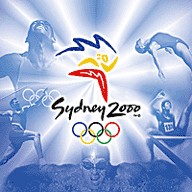
Sydney 2000
arrives right on time to tie-in with the Olympics currently
taking place Down Under. Eidos have succeeded where both EA Sports and
Empire Interactive failed miserably this summer (with Euro 2000 and
International Cricket Captain 2000 respectively), by producing not only
a top-quality in-depth simulation but also managing to release it
simultaneously on the three major formats - PC, Playstation and
Dreamcast.
This game is nothing if not comprehensive. A pleasing attention to
detail, coupled with a welcome non-Arcade alternative option, gives
Sydney 2000 a playability beyond the likes of Konami's seminal Track &
Field series.
Having said that, if simply competing in a quick-fire competition
against either human or computer opponents is all that's required,
Sydney 2000 delivers that with a gaming style pretty much identical to
Track & Field's two-button-pounding control system. While this is hardly
original, it's easy to pick up for beginners and instantly familiar to
everyone else.
No fewer than 12 events are featured -
100m Sprint: Virtually the same as the Track & Field staple, needing
only frenetic button/key pressing for around 10-15 seconds (or less if
you're good). Dipping for the finish line using a designated Action key
is a nice added touch.
110m Hurdles: As above, with the addition of Action key-hitting to clear
the hurdles.
High Jump: Another familiar event, and slightly easier to master than
the Konami equivalent.
Triple Jump: Once you've come to grips with getting the right projection
for each of three movements using the Action key, there are few
problems. The replay feature looks especially good for this, utilising
the superior graphics and multiple camera angles.
Hammer: My personal lack of co-ordination always makes this one tough,
but the upside of that is I get to hear the witticisms of the commentary
team as they ridicule my pathetic attempts. I always did prefer the Shot
Putt....
Javelin: Always fairly simple to get the hang of, this follows the
Track & Field blueprint down to the last detail (except, of course, for
the omission of that annoying Japanese computer voice reading out the
score)
100m Freestyle Swimming: Surprisingly good renderings of the swimmers
(including the pre-race rituals) make for dynamic gameplay. The replays
show the action form several angles, including underwater. Lovely.
10m Platform Diving: This is where Sydney 2000 comes into its own, with
the first (and best) of five exclusive events. Platform Diving is as
much fun in training or solo as in competition. That armstand reverse
dive with 4.5 somersault and 1.5 twist (in the piked position) will soon
be second nature. The early qualifying rounds offer some amusement, as
hopeless entrants completely fluff their dives. And you won't want to
miss the replays of your brilliant exploits.
Kayak K1 Slalom: Recalls childhood memories of Superstars (late 70s and
early 80s TV show that pitted famous sportspersons against each other in
a kind of Decathlon). Manoeuvre through raging white-waters and
negotiate the necessary markers and gates. If you can.
Super Heavyweight Weight Lifting: These guys are ugly... really
ugly... and that's before they grunt and grimace under several hundred
kilos. Despite using the same two-buttons-plus-action-key method, the
result is remarkably realistic and playable.
Olympic Sprint Cycling: A head-to-head relay race in which success
relies on the abiltity to conserve energy during the opening stages, as
well as a smooth peel-off at the end of each lap (by using the Action
key).
Skeet Shooting: A rather bizarre one, this. Burly men with dodgy
moustaches and wellies fire at moving pieces of clay. A lot. The
competition seems to go on for ever. Probably because I'm no good at it.
Many of these events actually have their own designated controller
settings, all of which are provided both in the game's menu and also its
accompanying instruction manual.
Where the game really excels is in Olympic Mode. Building up strength,
skills and morale through a careful series of assigned Gym Exercises
which get progressively tougher, you train for a round of Qualifying
tournaments in the hope of making the Olympic team in each of the 12
sports for your chosen nation. It's the section most likely to bear
repeated gaming, and by far the most rewarding. Performance improves
quite visibly as each training session is successfully negotiated.
The commentary is limited, but effective in small doses. If you choose
to view the efforts of all your opponents (computer or otherwise), most
phrases soon become repetitive.
While this is nothing particularly new as such, Sydney 2000 is a
well-timed and hugely enjoyable experience. One criticism is the fixed
gender for the athletes in each sport. Runners are always male, while
water events are exclusively performed by females. An option to choose
which sex you would prefer to compete as (and therefore with) would make
the game even better.
GRAPHICS SOUND EFFECTS AND MUSIC PLAYABILITY ORIGINALITY ENJOYMENT
This website uses cookies to improve your experience. We'll assume you're ok with this, but you can opt-out if you wish.Accept
Privacy Overview
This website uses cookies to improve your experience while you navigate through the website. Out of these, the cookies that are categorized as necessary are stored on your browser as they are essential for the working of basic functionalities of the website. We also use third-party cookies that help us analyze and understand how you use this website. These cookies will be stored in your browser only with your consent. You also have the option to opt-out of these cookies. But opting out of some of these cookies may affect your browsing experience.
Necessary cookies are absolutely essential for the website to function properly. This category only includes cookies that ensures basic functionalities and security features of the website. These cookies do not store any personal information.
Any cookies that may not be particularly necessary for the website to function and is used specifically to collect user personal data via analytics, ads, other embedded contents are termed as non-necessary cookies. It is mandatory to procure user consent prior to running these cookies on your website.